

Cybersecurity & Security
Fight advanced threats by sharing intelligence — without sharing data
Get in touch
Enhancing security through privacy-preserving data collaborations
Sherpa.ai empowers organizations to harness the full potential of secure, collaborative AI for cybersecurity across departments, partners, and edge devices without ever sharing sensitive threat intelligence or user data.
From ransomware detection and intrusion prevention to threat intelligence sharing, Sherpa.ai’s Federated Learning platform reduces communication overhead, ensures data sovereignty, and delivers real-time threat insights across decentralized and highly sensitive environments.
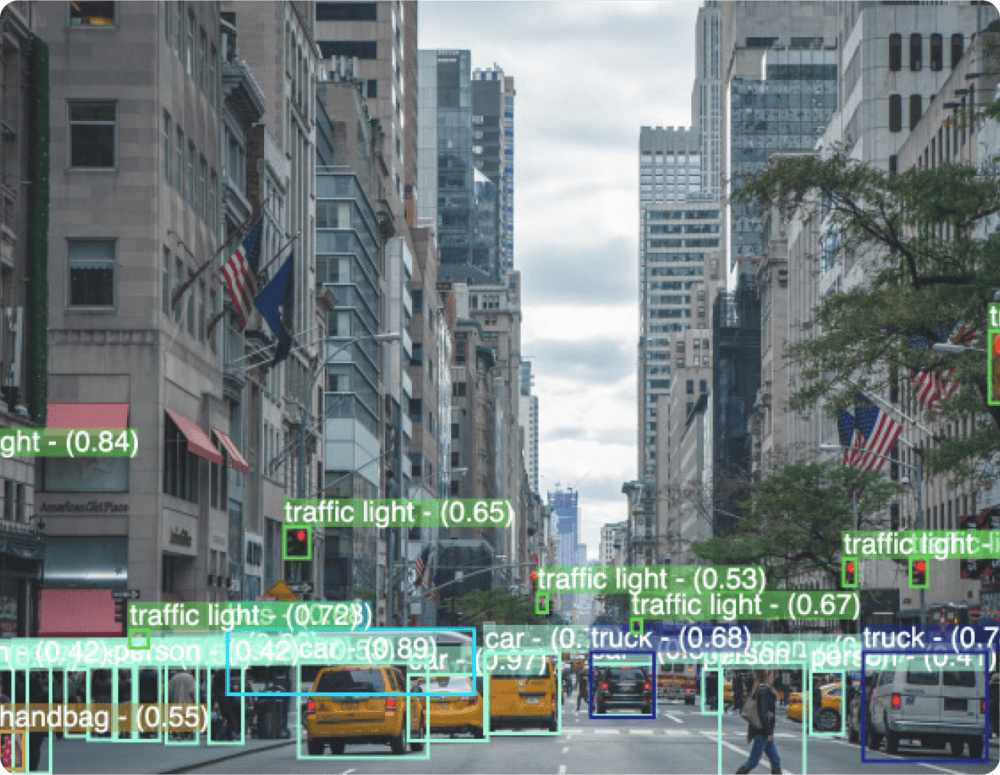
The use of privacy-enhancing technologies such as Secure Multiparty Computation and Differential Privacy will play a key role in the collaborative development of new models through federated learning. Sherpa.ai platform enables this colaboration ensuring security & privacy.
Former Deputy Director, Office in Science and Technology Policy, The White House

Federated Learning Cases in Cybersecurity & Security
Collective Threat Detection
Unify signals from multiple organizations to detect complex attack patterns without exposing internal systems.
Stronger Defense Models Across Companies
Train federated models on cross-company data to prevent more sophisticated attacks.

Proactive Ransomware Attack Prevention
Identify suspicious behavior early without needing to share internal logs.

Protection of Critical Infrastructures
Collaborate with other entities to secure essential environments while maintaining full control over your data.
Federated Cyber Defense: Privacy-Preserving Ransomware Detection Across Distributed Systems
This paper presents a groundbreaking Federated Learning approach that revolutionizes how ransomware is detected across globally distributed systems. Leveraging the Sherpa.ai FL platform, it empowers cybersecurity companies, hardware manufacturers, and software providers to jointly train advanced AI models without ever moving or exposing private data. The framework achieves a 9% improvement in detection accuracy while maintaining full compliance with privacy regulations. This innovation marks a major leap toward secure, sustainable, and large-scale cyber defense, enabling proactive threat detection across millions of protected devices worldwide.

Reducing by 99% the Communications of a Single Training
This paper presents a novel Federated Learning framework that enables secure, collaborative model training across multiple organizations without sharing raw data. By optimizing communication efficiency, it reduces network exchanges by up to 99%, dramatically enhancing data privacy and security. The proposed architecture improves scalability, lowers energy consumption, and achieves state-of-the-art performance across real-world applications in healthcare, finance, manufacturing, cybersecurity, aerospace and defense.

Federated Malware Detection Across Organizations with Sherpa.ai
This projects showcases how Sherpa.ai’s Federated Learning platform can enhance ransomware attack detection across distributed endpoints —without sharing any raw system logs or behavioral telemetry.
In cybersecurity environments, especially those handling sensitive infrastructure and endpoint data, centralizing threat information is often infeasible due to privacy regulations (e.g., GDPR), and the risk of data breaches. Sherpa.ai addresses these challenges by enabling organizations—such as financial institutions, manufacturers, or public agencies—to collaboratively train models while keeping data local and protected.
Results show that Sherpa.ai’s federated model significantly outperforms local-only models and closely approaches the performance of centralized training.
These results confirm that organizations can benefit from richer, more diverse threat signals without compromising data ownership or security.
How Federated Learning Can Transform Enterprise Cybersecurity
In an increasingly complex digital environment threatened by cyberattacks, companies face the enormous challenge of protecting their data and systems without compromising privacy or operational efficiency. Traditional cybersecurity solutions, which rely on centralized data analysis, are beginning to show limitations in the face of more sophisticated threats, stricter regulations, and a growingly distributed technological ecosystem.
